



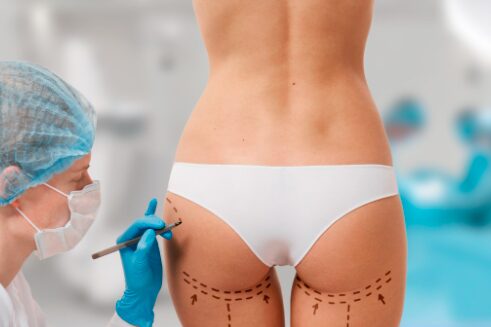
The Brazilian butt lift has been in the news more often for the wrong reasons than almost any other cosmetic procedure. Stories of patients who flew to cut-rate clinics abroad, or who booked with uncredentialed providers closer to home, and never came back. That reputation is real, and it’s why the procedure needs more patient scrutiny than most other surgeries.
The good news is that the BBL is safer now than ever, but only in the hands of surgeons who take it seriously. Over the past decade, multiple plastic surgery societies have worked together to rebuild the standards for how this procedure is performed, and patients who understand those standards can protect themselves. Choosing the right surgeon and facility matters more for a BBL in NYC than for almost any elective procedure you could consider.
Manhattan has a deep bench of board-certified plastic surgeons who specialize in body contouring, including practices by Sachin M. Shridharani, MD, FACS: LUXURGERY©. The checklist below applies no matter which consultation you book first.
Board Certification by the ABPS
Your surgeon must be certified by the American Board of Plastic Surgery. Not a cosmetic surgery board, a dermatology board, or an aesthetic medicine board that sounds official but isn’t recognized by the American Board of Medical Specialties.
ABPS certification means the surgeon completed an accredited plastic surgery residency, passed rigorous written and oral exams, and maintains continuing education. You can verify any surgeon’s status in about 30 seconds on the ABPS website. If a surgeon dodges the question or uses creative titles that sound similar but aren’t the same, walk away.
Ask Specifically about their BBL Technique.
The cause of nearly every BBL fatality has been fat embolism, where fat is accidentally injected into a vein, travels to the lungs, and blocks circulation. This happens when fat is placed too deep, into or below, the gluteal muscle, where the large veins are located.
Safe BBL technique now means injecting fat exclusively into the subcutaneous layer, above the muscle. Any surgeon performing intramuscular or submuscular fat grafting is operating outside current safety standards, no matter how good their before-and-after photos look. The American Society of Plastic Surgeons put together a patient-friendly breakdown of things you need to know about a Brazilian butt lift, which explains why technique changes have reduced the mortality rate from roughly 1 in 3,000 to about 1 in 15,000.
Look for Real-Time Ultrasound Guidance.
This one is newer but becoming the standard. Intraoperative ultrasound allows the surgeon to see exactly where the cannula is during injection in real time. Florida made ultrasound guidance mandatory after a wave of BBL deaths in the state. New York hasn’t gone that far yet, but the best surgeons have adopted it anyway.
If a NYC surgeon is still performing BBLs without ultrasound in 2026, that tells you something about how seriously they take the safety research. A surgeon who uses ultrasound is paying attention to the most current data available and investing in equipment that directly reduces the risk of the worst possible outcome.
Check the Facility Accreditation
A board-certified surgeon operating in an unaccredited facility is still a risk. Accredited surgical centers carry strict protocols for equipment, sterilization, emergency response, staffing, and anesthesia oversight. The three main accrediting bodies are AAAASF, AAAHC, and the Joint Commission.
Ask to see the facility accreditation certificate and ask who administers anesthesia. A board-certified anesthesiologist or CRNA is standard. If the surgeon is both operating and supervising anesthesia, or if the facility uses sedation administered by untrained staff, that’s a hard no.
Understand the Actual Risks.
The Aesthetic Society publishes a direct patient-facing guide on butt lift risks and safety that covers every potential complication, from fat embolism to asymmetry, infection, seroma, and unsatisfactory results. Read it cover to cover before your consultation.
Your surgeon should be willing to discuss each of these with you and give you realistic numbers. Fat reabsorption is normal, often 30 to 40 percent, which is why a good surgeon plans overcorrection into the result. Asymmetry happens and sometimes requires revision. Recovery takes a minimum of six to eight weeks before full activity. Anyone promising a completely predictable, risk-free outcome is lying to you.
Vet the Before-and-Afters Carefully.
Look beyond the glamour shots. Ask to see patients with body types similar to yours, photographed from multiple angles, taken at least 6 months after surgery. Early photos hide what the result actually looks like once swelling resolves and fat reabsorbs.
If every result looks identical, the surgeon is doing the same procedure on every patient regardless of anatomy. The best BBL surgeons tailor volume, placement, and projection to the individual frame, and their portfolios show that range.
The Bottom Line
A well-performed BBL performed by a board-certified plastic surgeon in an accredited facility, using a subcutaneous-only technique and ultrasound guidance, now has a safety profile comparable to that of most other major elective cosmetic surgeries. The patients who get into trouble are almost always the ones who skipped one or more of those boxes. Your job as the patient is to check every box before you ever sign a consent form.