



In modern warehouse environments, protection systems are expected to do much more than create visual boundaries. They have to support movement, reduce avoidable damage, and help maintain a safer relationship between forklifts, storage systems, and pedestrian routes. As warehouses become more active and more space-efficient, the cost of impact-related disruption becomes easier to see. A damaged rack leg, a poorly protected aisle edge, or an exposed structural point can affect far more than one small area. That is why barrier planning should be treated as part of warehouse performance, not only as a basic safety accessory.
Flexible Protection Supports Real Operational Demands
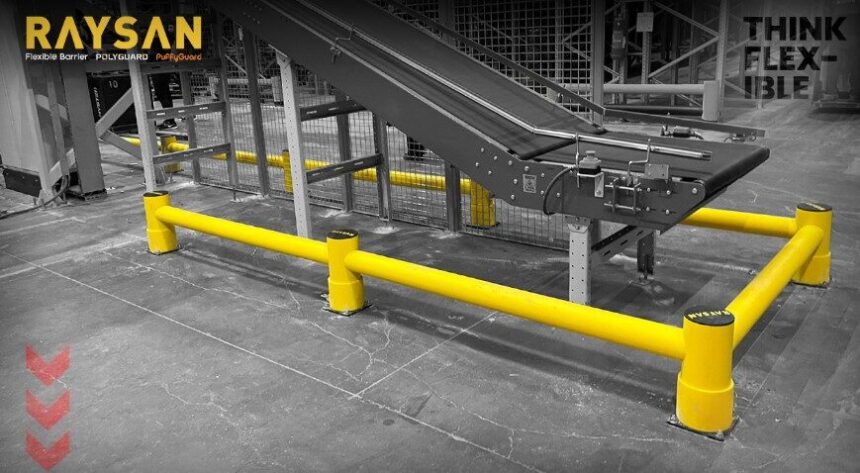
Flexible Barrier solutions are especially relevant in facilities where impact risk is tied to constant movement rather than rare incidents. In these settings, protection has to work with the operation instead of simply standing beside it. A more flexible barrier concept helps create that balance by giving warehouse planners a way to protect critical zones without losing sight of daily traffic logic, operator behavior, and the need for uninterrupted flow. This is one of the reasons flexible systems have become increasingly valuable in industrial spaces that cannot afford recurring impact damage or unnecessary downtime.
Safety barrier applications strengthen that protection strategy by making movement patterns more visible and more disciplined. A well-positioned barrier system helps define where vehicles should turn, where operators should walk, and which areas need stronger separation. That clarity matters because many industrial risks are not caused by a total lack of safety measures, but by unclear transitions between active zones. When the physical environment communicates more clearly, the site becomes easier to navigate and easier to manage.
Rack Protection Is Structural Protection
Among all warehouse risk points, rack structures deserve special attention. They carry stored loads, define aisle geometry, and remain exposed to frequent vehicle approach. Because of that, even low-level contact can create long-term structural concerns if protection is not planned properly. Warehouse operators often focus on visible traffic routes first, but the true resilience of the storage system depends heavily on how well these critical lower rack zones are protected.
Rack Protection Barrier solutions directly address that need by reinforcing one of the most vulnerable parts of the warehouse layout. Rather than treating rack protection as an optional detail, this approach places it where it belongs: at the center of long-term warehouse safety and storage reliability. Raysan’s barrier mindset becomes especially clear here, because the goal is not simply to add another product to the floor. It is to build a smarter protection model where traffic control, rack stability, and impact management work together. In practice, that means fewer preventable repairs, stronger protection for critical storage assets, and a warehouse environment that stays safer under real operating pressure.