



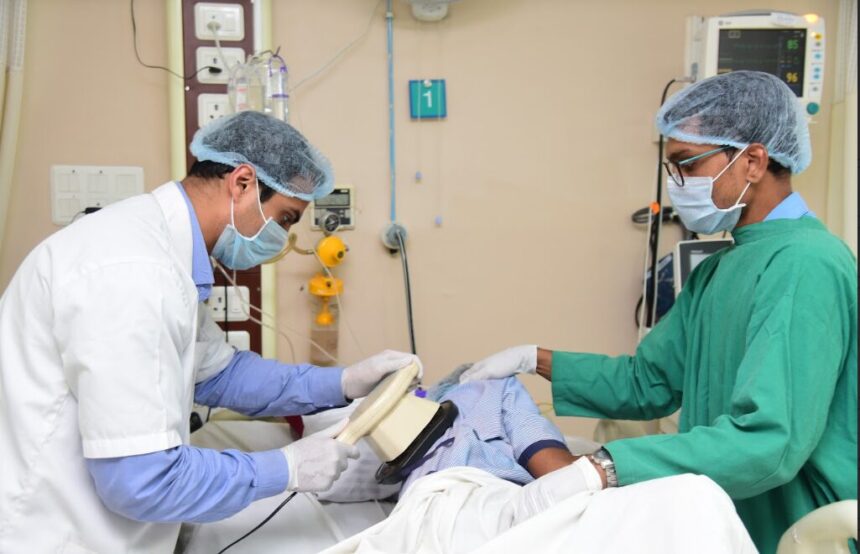
Not all hospitals are the same. That sounds obvious, but when you’re in a car accident at 2 a.m. or watching someone you love get rushed into an ambulance, it’s a detail that suddenly matters more than anything else. Trauma centres are ranked by level. Level I through Level V. Each level tells you something specific about what that facility can do for a patient, and what it can’t. Understanding the difference can, in some situations, determine whether someone survives.
What Makes a Trauma Centre Different
A regular emergency room handles cuts, broken bones, chest pain, and allergic reactions. A trauma centre is built for something more serious: injuries that threaten life or limb within minutes.
These are injuries from car crashes, falls from height, gunshot wounds, or industrial accidents. The kind where time isn’t just money. It’s survival.
The American College of Surgeons (ACS) verifies trauma centres across the United States. Each designation comes with specific staffing requirements, equipment standards, and performance benchmarks that a hospital must meet to keep its status.
Level I: The Top of the Chain
A Level I trauma centre is the most prepared facility for severe, complex injuries. It has surgeons on-site around the clock. Not on-call. On-site.
It also has specialists available at all hours: neurosurgeons, orthopaedic surgeons, anaesthesiologists, and intensive care teams. Beyond immediate care, Level I centres are required to conduct research and run training programmes. They serve as the regional resource for the most serious trauma cases.
If a patient arrives at a lower-level facility with injuries that go beyond what that centre can manage, the goal is to stabilize and transfer to a Level I.
Level II: Capable and Comprehensive
A Level II centre handles most trauma cases without transferring the patient elsewhere. It may not carry the same research requirements as Level I, and round-the-clock in-house coverage of every speciality isn’t always guaranteed. But for the vast majority of trauma patients, a Level II provides full, life-saving care.
The difference between Level I and Level II is perhaps most relevant in extremely complex cases or rare injury patterns. For typical high-severity trauma, Level II centres perform well. Many patients never need to go beyond one.
Level III: Stabilise First, Transfer If Needed
Here’s where things shift. A Level III centre doesn’t aim to provide definitive care for every serious injury. Its job is to assess, stabilize, and transfer patients who need more than it can offer.
These facilities are common in smaller cities and suburban areas. They have general surgeons and emergency physicians available, but certain specialists may not be present. A trauma patient with a severe brain injury, for example, may be stabilised at a Level III and then moved to a higher-level centre.
This is not a failure. It’s how the system is designed to work.
Level IV and Level V: Rural Lifelines
Level IV and Level V centres exist primarily in rural or remote areas where access to higher-level care isn’t realistic in an emergency. They provide initial evaluation and stabilisation before transport.
A Level IV centre has 24-hour emergency coverage. It manages minor trauma and prepares more serious patients for transfer. Level V centres, where they exist, offer the same basic stabilisation function but with fewer resources on hand.
Think of them as the first link in a chain. They buy time.
Why the Level Matters for You
If you live near a Level I or II centre, your odds in a serious trauma situation are statistically better. Research published in the Journal of Trauma and Acute Care Surgery has consistently shown that patients treated at higher-level trauma centres have lower mortality rates for severe injuries.
That doesn’t mean you should drive past a closer hospital if every second counts. Proximity and response time still matter. But if you have a choice of hospitals in non-emergency planning, it’s worth knowing which trauma level each nearby facility holds.
What Patients and Families Should Know
When a loved one is in trauma, you don’t always get to choose the hospital. Paramedics follow regional protocols that direct patients to the most appropriate facility based on injury severity and distance.
Ask the trauma team what level the centre is certified at. Ask whether the injuries require transfer. You’re allowed to ask these things. Medical staff expect it.
If a transfer gets recommended, it usually means the patient needs something that the facility genuinely cannot provide. That’s not a bad sign. It’s the right call being made at the right time.
One More Thing Worth Saying
Not only do trauma centres vary in their facilities, but they also vary in the frequency of practising for the worst-case scenario. High-volume trauma centres, which are mostly classified as Level I and Level II, handle enough cases to keep their staff proficient.
For instance, a Level I trauma centre might experience thousands of trauma activations per year. The more cases they handle, the faster they become at responding.
When seconds matter, that experience gap is real.