



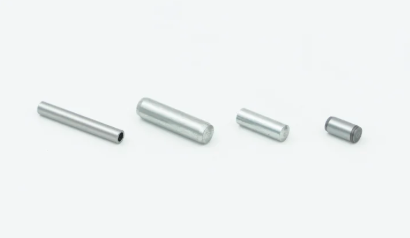
Dowel pins are small cylindrical parts that play an important role in engineering and mechanical assemblies. Although they are simple in design they help ensure precise alignment and positioning of different machine parts. In many engineering applications, a slight misalignment can have an impact on the performance, safety and durability of equipment. Dowel pins help avoid such problems by keeping the components in their correct position during the assembly and working of a structure.
These pins are extensively used in various industries such as manufacturing, automotive engineering, heavy machinery, precision engineering, etc. Their capability of maintaining constant alignment makes them vital in assemblies where accuracy and stability are required. Understanding what dowel pins are, how they work, and where they are commonly used helps to understand why they are still an important part of many mechanical systems.
Understanding What Dowel Pins Are
Dowel pins are cylindrical mechanical fasteners that are used for alignment and positioning two or more components in a mechanical assembly. They are usually solid rods with smooth surfaces which fit precisely into holes drilled in matching parts. Once inserted, the pins help to maintain the parts in a fixed position by keeping them placed in a fixed position as the operation is being performed.
Unlike threaded fasteners such as screws or bolts, dowel pins are not used for clamping the components together. Their main purpose is to give a precise positioning and avoid changing parts. Dowel pins are used with bolts or screws in many assemblies. While the bolts provide the clamping force, the dowel pins help to keep the components aligned.
Because dowel pins are made with precise dimensions and close tolerances, they make a secure fit when inserted inside pre-machined holes. This close fit aids in maintaining a consistent fit which is important within applications where mechanical accuracy is required.
Key Features of Dowel Pins
There are several characteristics that make dowel pins ideal for engineering and industrial applications. Their design may seem simple, but they have certain features that enable them to carry out important functions within mechanical assemblies.
One of the most important features of dowel pins is its dimension precision. These pins are made with tight tolerances to ensure a tight and accurate fit within drilled holes. This accuracy is sufficient so that the components fit together every time they are assembled.
Another important feature is that they are capable of withstanding the shear forces. In many machines, parts may have sideways forces applied them that can cause parts to move. Dowel pins can help resist these forces and keep the parts in place during operation.
Dowel pins are also manufactured from other materials based on its application. Materials like hardened steel, stainless steel, and alloy steels are commonly used materials due to their strength, durability, and wear resistance. The material choice is often related to load requirements, environmental conditions, and corrosion resistance.
Different Types of Dowel Pins
Although dowel pins share a common purpose, several variations exist to suit different engineering requirements. Each type is designed to provide specific advantages depending on the application.
Straight dowel pins are the most commonly used type. They have a uniform cylindrical shape and are widely used for standard alignment tasks in machinery and mechanical assemblies.
Tapered dowel pins have a slight taper along their length. This design allows them to fit tightly into matching tapered holes, providing a strong and secure connection.
Grooved dowel pins include surface grooves that increase friction when the pin is inserted into a hole. These grooves improve the pin’s grip and help prevent movement within the assembly.
The selection of a particular type depends on factors such as required precision, mechanical load, and installation method.
Role of Dowel Pins in Mechanical Alignment
One of the most important functions of dowel pins is to maintain accurate alignment between machine components. In mechanical systems, even minor alignment errors can lead to vibration, uneven wear, or reduced efficiency.
Dowel pins act as positioning guides during assembly. Once inserted into corresponding holes in two parts, they lock the components into a fixed position. This ensures that the parts remain aligned throughout the operation of the machine.
Another advantage of dowel pins is their ability to maintain alignment during repeated assembly and disassembly. In many industrial environments, machines require regular maintenance or replacement of parts. Because dowel pins remain in precise positions, components can be reassembled with consistent accuracy.
Applications in Manufacturing Equipment
Manufacturing systems often rely on precise positioning of components to ensure consistent production results. Dowel pins are commonly used in jigs, fixtures, and tooling equipment that guide machining operations.
In machining fixtures, dowel pins help position workpieces accurately so that cutting tools can perform operations such as drilling, milling, or turning with high precision. This accuracy is essential for producing components that meet strict dimensional requirements.
Tool and die assemblies also use dowel pins to maintain alignment between multiple parts. Accurate positioning ensures that the tools operate correctly and produce consistent results during manufacturing processes.
Use in Automotive and Industrial Machinery
The automotive industry uses dowel pins extensively in engine assemblies and other mechanical systems. Engine components such as cylinder heads, engine blocks, and transmission housings often require precise alignment for proper functioning.
Dowel pins help maintain this alignment by positioning the components accurately during assembly. Without proper alignment, engines and mechanical systems may experience excessive vibration or mechanical failure.
Industrial machinery also uses dowel pins to maintain the alignment of moving parts and structural components. Equipment such as pumps, gearboxes, and heavy mechanical systems rely on precise positioning to operate smoothly and efficiently.
Applications in Precision Engineering
Certain industries require extremely high levels of accuracy and reliability. Aerospace engineering, medical equipment manufacturing, and precision instrumentation are examples of fields where even small alignment errors can have serious consequences.
In these applications, dowel pins help ensure that components remain positioned exactly as intended. Aircraft systems, precision instruments, and specialised equipment often depend on accurate assembly to maintain safety and performance standards.
Because dowel pins are manufactured with strict dimensional tolerances, they provide a dependable alignment solution for these demanding applications.
Advantages of Using Dowel Pins
Dowel pins offer several advantages that explain their widespread use in engineering applications. One of the most important advantages is their ability to provide highly accurate positioning between components.
Another benefit is repeatability. Because the pins fit precisely into machined holes, they allow assemblies to be reassembled multiple times while maintaining the same alignment.
Dowel pins also provide strong resistance to shear forces, helping maintain structural stability under mechanical loads. In addition, their simple design makes them easy to install and replace when necessary.
These characteristics make dowel pins a reliable solution for engineers who need consistent alignment in mechanical systems.
Conclusion
Dowel pins are small components that perform an important role in engineering and manufacturing. Their primary function is to maintain precise alignment between mechanical parts, ensuring that machines operate smoothly and efficiently.
From manufacturing equipment and automotive engines to aerospace systems and precision instruments, dowel pins are used in a wide variety of engineering applications. Their ability to provide reliable positioning, resist mechanical forces, and maintain accuracy makes them an essential part of many mechanical assemblies.
Although they are simple in appearance, dowel pins demonstrate how small components can have a significant impact on the performance and reliability of complex engineering systems.