


You purchased a packet of these patches because you liked the advertisement. They assured that your skin will be smooth within eight hours. You applied one to your whitehead, slept in anticipation, and when you got up, there was nothing but the patch on your pillow and the same pimple as before.
This happens more often than the brands selling those patches will tell you. The acne patch industry has exploded over the last few years, and with it, a wave of products that look the part but do not deliver. Most of them fail for reasons that have nothing to do with your skin and everything to do with how the patch was made.
Most Acne Patches Are Not Real Hydrocolloid
The starting point is the material used. An actual hydrocolloid patch is the same type of dressing that has been applied to burns and wounds during surgery for years now. This material will absorb liquid by forming a gel on the surface of the skin.
A lot of cheaper acne patches skip this entirely. They use silicone gel or plain medical tape with a sticker design. These materials look like hydrocolloids. They feel similar in the box. But they cannot pull anything out of the pimple. They sit on top, do nothing, and fall off.
You can test this at home. A real hydrocolloid patch turns white or cloudy after a few hours on a whitehead. A fake one stays clear and flat. If you have used an acne patch and never seen that milky color, you have probably been using the wrong material the whole time.
The Adhesive Gives Up Too Soon
The other point of failure lies in the adhesion. Cheaper adhesives peel after an hour or two. You sweat. You touch your face. You turn over during sleep. The patches peel outwards and come off.
The pimple needs that contact for the full six to twelve hours of absorption. Lose contact early, and the absorption stops. The pimple keeps growing because no fluid is being drawn out, and the picking barrier is gone.
You can usually feel a weak adhesive within minutes. The patch feels like a sticker, not part of your skin. An acne patch worth using disappears under your fingertip and stays put through a workout.
One Size, One Job, One Disappointment
Most brands sell a single acne patch and call it a complete solution. The truth is that pimples have stages, and each stage needs a different format.
A whitehead has surface fluid to absorb. A flat hydrocolloid dot works on it. A cystic bump under the skin has nothing for a flat patch to pull. Microdot patches with tiny needles press into the skin and reach what flat patches cannot. A healing pimple needs a thin barrier, not a thick absorber.
When a brand sells one acne patch for every type of breakout, the patch was always going to fail on at least two of the three. That is not a problem of effort on your end. That is a design problem on their part.
You Pulled It Off Too Early
The hydrocolloid works in a slow process. In the initial two hours, it’s just about adhering to the skin and getting warmed up to the body temperature. Actual removal of the fluid happens in the subsequent four to eight hours. Patients wait for just two hours and, seeing no white spot on the patch, think nothing is happening. They remove it and discard it.
This is wrong. They could have gotten their results. It wasn’t over yet. If one wants to know what patches can do, they have to leave it alone for an entire night and take a look at it early in the morning.
Added Ingredients That Hurt More Than They Help
Other brands include salicylic acid, tea tree oil, or retinol into the patch and promote this as an advanced form of regular hydrocolloid patches. However, the truth is more brutal. These active substances are trapped beneath an occlusive barrier directly on your skin, remaining there from six to twelve hours.
What worked well in a regular serum can become overwhelming when placed under a patch. When you awake, you will find a red outline surrounding the affected spot that disappears later than the spot itself. In case you experienced stinging, peeling, or dark spots as a reaction to using a patch, the blame does not lie in the hydrocolloid either.
The Skin Was Not Ready
This part is partly on the user, although the brands rarely warn you about it. Hydrocolloid only sticks to clean, dry skin. If you put a patch on top of moisturizer, oil, sunscreen, or even a damp face, it will not seal.
Skin-to-skin contact is needed for patch absorption. According to the American Academy of Dermatology, clean skin is one of the basic steps to be taken in order for the spot treatment to function as expected.
Tips To Help You Find A Patch That Works
Hydrocolloid should be mentioned among the ingredients, not silicon and gel. Pay attention to whether there is more than one option for patches in the offered range, since one bandage will never cover all cases from whiteheads to healing skin. Look through the usage period on the package. Less than six hours is too little to draw the liquid from the spot effectively. Finally, try the adhesive part on yourself, as a night test shows what is really working.
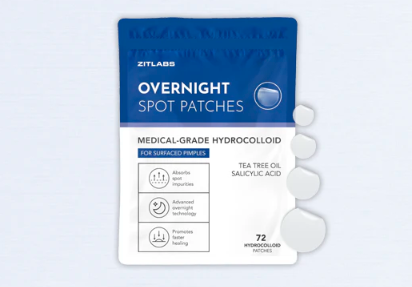
Zitlabs built the whole line around these failure points. Three patches matched to three stages of a breakout, all real hydrocolloid, all built to stay put through a normal day or a full night. Browse the collection at patchtherapy.com/collections/all and pick the one that fits the pimple you are dealing with right now.