


We have all been there. The clock is ticking, the cursor is blinking on a blank page, and your brain feels like it is stuck in a thick fog. In the modern world, high-pressure deadlines are a fact of life, but the way we handle them is often counterproductive. Most people reach for a fourth cup of coffee or try to “power through” by sacrificing sleep. However, elite performers—from Silicon Valley CEOs to professional athletes—use a different approach called biohacking. Biohacking is the practice of changing your chemistry and your physiology through science and self-experimentation to increase energy and focus.
When the pressure reaches a boiling point, the smartest move is to audit your energy budget. You cannot achieve a “flow state” if your mind is cluttered with the stress of formatting or basic research. Many high-achieving students maintain their mental clarity by seeking Assignment Writing Help from professional services like myassignmenthelp to handle the heavy lifting of technical drafts. By delegating the time-consuming administrative parts of a project to myassignmenthelp, you free up your cognitive bandwidth to focus on the high-level critical thinking and biohacking techniques that actually move the needle on your performance.
1. The Science of Ultradian Rhythms
Most people think of productivity as a marathon, but our brains are actually designed for sprints. Our bodies operate on “ultradian rhythms,” which are cycles of about 90 minutes of high-frequency brain activity followed by 20 minutes of lower-frequency recovery. When you ignore these cycles and try to work for four hours straight, your cortisol levels spike, and your ability to retain information drops significantly.
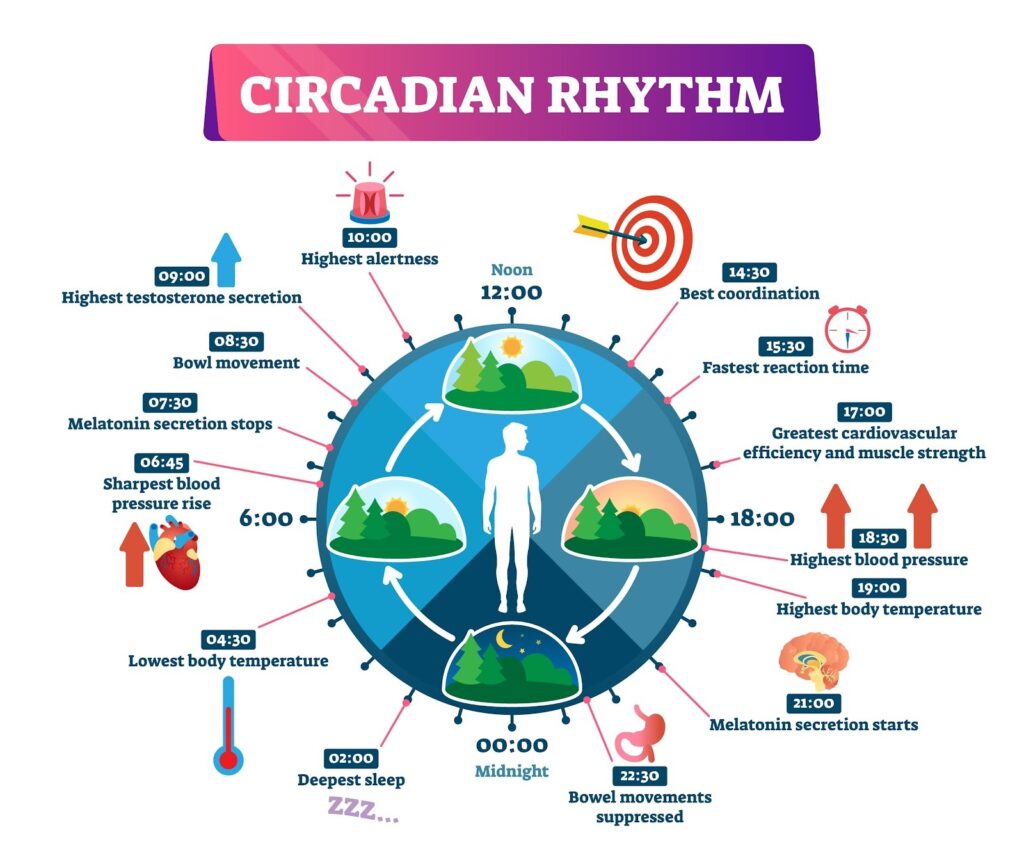
To biohack this, work in 90-minute “Deep Work” blocks. Set a timer and remove all distractions—no phone, no email, no social media. Once the timer goes off, you must step away from your desk. A 20-minute break where you move your body or stare at a distant object resets your brain’s chemistry, allowing you to return for another 90 minutes of 100% focus.
Why the 90-Minute Mark Matters
During the peak of an ultradian cycle, your brain is in an “alpha” or “beta” wave state, which is ideal for logical processing and creative output. After 90 minutes, the brain shifts toward “theta” waves, leading to daydreams and a loss of concentration. Forcing yourself to work through this dip results in diminishing returns and increased errors.
2. Cold Exposure: The Instant Neurochemical Reset
If you find yourself nodding off or re-reading the same sentence five times, your nervous system needs a “hard reboot.” One of the fastest biohacks for mental clarity is cold exposure. Splashing your face with ice-cold water or taking a 30-second cold shower triggers a massive release of norepinephrine and dopamine.
These neurochemicals are responsible for alertness and mood. The sudden cold shock forces your brain to snap into the present moment, clearing away “brain fog” more effectively than any energy drink. It also improves your “heart rate variability” (HRV), which is a key metric for how well your body handles stress. Higher HRV means you are more resilient and less likely to panic when a deadline approaches.
Comparison: Traditional vs. Biohacked Focus
| Feature | The Traditional “Grind” | The Biohacked Approach |
| Energy Source | Excessive Sugar & Caffeine | Strategic Nutrients & L-Theanine |
| Work Schedule | All-nighters / 4-hour blocks | 90-minute Ultradian Sprints |
| Stress Response | Panic and high Cortisol | Cold resets and HRV management |
| Recovery | Scrolling social media | 20-min “Non-Sleep Deep Rest” |
| Cognitive Load | Struggling with everything alone | Utilizing professional support systems |
3. Nutritional Synergy: The Caffeine + L-Theanine Stack
Caffeine is the world’s most popular biohack, but it is often used incorrectly. Drinking too much coffee leads to “the jitters” and an eventual crash that leaves you more tired than before. To maintain a steady, laser-like focus, you should pair your caffeine with a natural amino acid called L-Theanine, which is found in green tea.
L-Theanine promotes “alpha brain waves,” which are associated with a state of relaxed alertness. When combined with caffeine, it smooths out the stimulant’s edge. You get the focus and energy of the caffeine without the anxiety or the heart palpitations. This combination allows you to stay in a calm, productive zone for hours, making it much easier to tackle complex problem-solving or creative writing tasks.
4. The “Second Brain” and Energy Budgeting
Biohacking isn’t just about what you put in your body; it’s about how you manage your external systems. Your brain is for having ideas, not for holding them. When you are juggling multiple projects, the sheer volume of information can lead to “decision fatigue.” To avoid this, you need a “Second Brain”—a digital system where you track every task, deadline, and reference note.
When managing complex academic ventures alongside professional goals, the workload can become mathematically impossible for one person. In these moments, utilizing Project Management Assignment Help through myassignmenthelp acts as an external hard drive for your brain, allowing experts to organize your project structures while you focus on execution.
The Cost of Context Switching
Every time you stop writing to check a formatting rule or look up a reference, you lose “switching cost” energy. It takes an average of 23 minutes to return to full focus after a distraction. By delegating the secondary parts of your assignment to professional services, you eliminate these micro-distractions and keep your focus on the core message.
5. Optimized Sleep Hygiene for Memory Consolidation
You don’t actually learn while you are studying; you learn while you are sleeping. Sleep is the time when your brain flushes out toxins and moves information from short-term memory to long-term storage. If you sacrifice sleep to meet a deadline, you are effectively deleting the work you did that day.
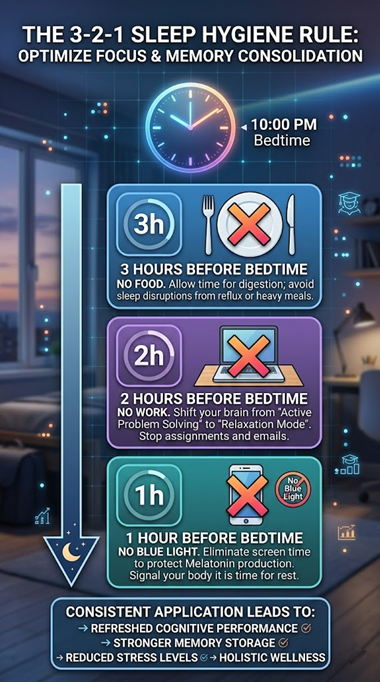
To biohack your sleep during a high-pressure week, follow the 3-2-1 Rule:
- 3 Hours Before Bed: No more heavy food. Digestion takes energy away from brain repair.
- 2 Hours Before Bed: No more high-intensity work. Shift to light reading or planning.
- 1 Hour Before Bed: No screens. Blue light stops melatonin production, keeping your brain “awake” even when your eyes are closed.
The Importance of the REM Cycle
Rapid Eye Movement (REM) sleep is where emotional processing and creative problem-solving happen. If you cut your sleep from 8 hours to 4, you aren’t just losing half your sleep—you are losing nearly 80% of your REM sleep, which happens mostly in the second half of the night. This is why you feel “uncreative” after an all-nighter.
6. Environmental Biohacking: The “Flow State” Office
Your physical environment sends signals to your brain. If you work in the same place you eat or watch TV, your brain gets confused about what “mode” it should be in.
- Lighting: Use bright, cool light during the day to mimic the sun and keep cortisol levels optimal for work.
- Scent: Using essential oils like rosemary or peppermint can stimulate the olfactory bulb, which is directly linked to the brain’s memory centers.
- Sound: Use “Brown Noise” or binaural beats at 40Hz to encourage gamma brain waves, which are linked to high-level information processing.
7. Digital Minimalism: Protecting Your Dopamine
In 2026, the greatest threat to your focus is the “attention economy.” Apps are designed to hijack your dopamine system. A true biohacker treats their attention as their most valuable currency. Use tools that block distracting websites during your 90-minute sprints. By removing the temptation to “just check one thing,” you preserve your willpower for the actual work.
Sample Biohacker Daily Schedule for Deadlines
| Time | Activity | Biohack Applied |
| 07:00 AM | Wake Up + Sunlight | Circadian Rhythm Reset |
| 08:30 AM | Deep Work Block 1 | Ultradian Peak (90 Mins) |
| 10:00 AM | 20-Min Break | Movement / Hydration |
| 10:30 AM | Deep Work Block 2 | Caffeine + L-Theanine Stack |
| 12:00 PM | Healthy Lunch | Low-Glycemic Brain Fuel |
| 02:00 PM | The “Midday Slump” | Cold Exposure / Cold Shower |
| 04:00 PM | Admin/Delegation | Reducing Cognitive Load |
| 08:00 PM | Digital Sunset | Melatonin Protection |
Final Thoughts: Resilience is a Skill
Maintaining 100% focus isn’t a gift that some people are born with; it is a result of managing your biology effectively. When you respect your body’s natural rhythms, feed your brain the right nutrients, and use professional support systems to manage your “cognitive load,” you become unstoppable. High-pressure deadlines don’t have to lead to burnout. With the right biohacking secrets, they can become the moments where you perform your best work. Success in 2026 is about working with your nature, not against it.
Frequently Asked Questions
How does a cold shower improve mental clarity?
Cold exposure triggers a “biological reset” by releasing norepinephrine and dopamine. This sudden shift in your nervous system snaps you into the present moment, instantly clearing brain fog and increasing your alertness for high-pressure tasks.
What is the benefit of the “3-2-1 Rule” for sleep?
By stopping food, high-intensity work, and screen use at specific intervals before bed, you allow your body’s melatonin production to rise naturally. This ensures your brain can move information into long-term memory effectively overnight.
Why should I pair caffeine with L-Theanine?
L-Theanine is an amino acid that promotes “alpha” brain waves, which are linked to relaxed focus. When combined with caffeine, it eliminates the jittery side effects and energy crashes, providing a smooth, consistent flow of concentration.
How do ultradian rhythms affect productivity?
The human brain is optimized for 90-minute bursts of high energy followed by short recovery periods. Respecting these natural cycles prevents cortisol spikes and mental exhaustion, allowing you to maintain peak performance throughout a long day.
About The Author
Emma Jones is a professional content strategist and lead researcher at myassignmenthelp. With a focus on student-centric success strategies and cognitive performance, she specializes in translating complex academic requirements into manageable, high-impact results for a global audience. When she isn’t developing educational resources, Emma is an advocate for holistic wellness and digital minimalism.