



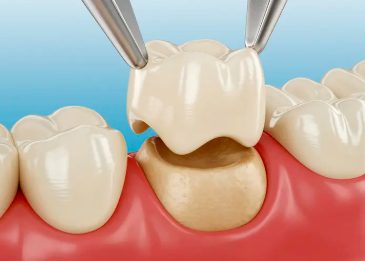
If your dentist has recommended a ceramic tooth cap, you might have questions in your mind. What exactly is this? Will this look out of the place in my smile? How long will this last? You are not the only one. Thousands of patients ask these same questions every day.
This simple guide will walk you through everything you needed to know about ceramic tooth cap. So, you can walk into your dental appointment feeling informed and confident.
What is a ceramic tooth cap?
It is also known as the ceramic crown. It is a custom-made covering that acts as a protective shell. Fitting over a damaged or weakened tooth, it restores the original shape, size, strength and colour.
Unlike metal crowns, they are made up of glass-like materials. This means it blends naturally with the surrounding teeth. In most cases, no one will even know you have a cap in your mouth.
When do you need one?
Your dentist may recommend a ceramic crown if you have:
- A damaged tooth that cannot be saved by regular filling.
- A cracked or broken tooth that needs protection.
- A tooth that has had root canal treatment.
- A dental implant that requires a crown on top.
- Teeth that severely stained, misshapen or worn out.
- A missing tooth that needs a dental bridge.
If any of these situations sound familiar, then a ceramic tooth cap could be exactly what your smile needs.
Types of ceramic dental crowns:
Not all dental crowns are the same. Your dentist will choose the right one based on your tooth location, how much pressure it bears and your aesthetics.
1. iMAX Crowns
– These crowns have excellent aesthetics. They naturally pick up the shade of the adjacent teeth.
– They are a great choice for front teeth where appearance matters the most.
2. Zirconia crowns
– It is the toughest of all ceramic materials.
– They are an excellent choice for back teeth where chewing forces are the highest. But they work well for the front teeth as well, because of their natural aesthetics.
Your dentist is the best person to decide which one will suit your specific teeth. Front teeth need more beauty, back teeth need more strength. The right crown will balance both.
Why choose a ceramic tooth cap over a metal one?
Here is a quick comparison to help you understand why so many people prefer ceramic crowns today:
| Feature | Ceramic cap | Metal crown/ PFM crown |
| Appearance | Natural tooth colour | Metallic or dark line at gum |
| Metal-free | Yes | No |
| Biocompatibility | Excellent | May cause allergies |
| Aesthetics | The colour doesn’t fade or stain | Dark metal line may become visible near the gums. |
| Best for | Front and back teeth | Primary back teeth |
One major advantage a patient appreciates is that there is no dark black line at the gum. This is a common complaint with older metal-based crowns.
The procedure: What happens step by step?
Getting a ceramic crown takes about two dental visits. Though some clinics with advanced technology can complete it in a single sitting.
Visit 1: Preparation
- Your dentist will examine the tooth and take X-rays.
- After the decision, the dentist will inform you if any dental procedure is needed.
- The tooth is then gently shaped and resized to make room for the cap.
- An impression or digital scan of your tooth is taken.
That is sent to the dental lab. They design your custom ceramic cap to match the exact shape and shade of your natural tooth.
Visit 2: Fitting
- The ceramic crown is checked for fitness, bite and appearance by placing it in your mouth.
- After the dentist confirms, it is permanently cemented to your teeth.
If needed, the procedure is done under local anesthesia. This will make you feel no pain or discomfort.
How long does a ceramic crown last?
With proper care, a ceramic crown can last upto 10-15 years or even longer. The lifespan depends on:
- How well is your oral hygiene
- Whether you grind your teeth in the night (a night guard can help with this)
- Avoiding habits like biting nails, chewing ice or opening packets with your teeth
- Regular dental check-ups every six months
Caring for your ceramic crown
Taking care of your cap is simple. It is not different from caring for your natural teeth:
- Brushing twice a day using a soft-bristled toothbrush
- Floss daily around the base of the crown to prevent food lodgment.
- Avoid very hard and sticky food.
- Wear a night guard if you clench or grind your teeth while sleeping.
- Visit your dentist whenever you face an issue.
Are there any cons?
Ceramic tooth cap are the best we have in the market. But it is fair to mention a couple of limitations:
- If a ceramic cap ever needs to be removed, then it requires cutting. It cannot be simply lifted off.
- They are more expensive than metal or PFM crowns.
But for some people, the natural appearance, safety and long-term comfort will outweigh these minor considerations.
Conclusion
A ceramic tooth cap is one of the most advanced and patient-friendly solutions. If you need to protect a root canal treated tooth, cover an implant, fix a badly decayed tooth or improve the look- a ceramic crown offers a natural, durable and metal-free solution.