



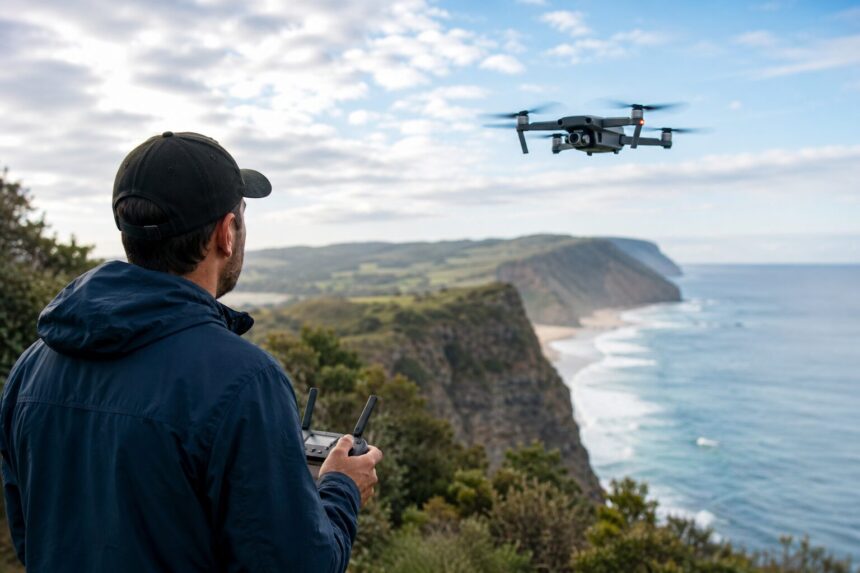
Getting a drone in the air for the first time is genuinely exciting. The footage you can capture, the perspective you gain from above, it’s easy to see why so many people have taken up recreational and commercial flying in recent years. But NSW has a fairly detailed regulatory framework around drones, and new pilots often discover its edges the hard way. A drone licence in NSW isn’t always required, but understanding when it is and what the rules are regardless can save you a lot of trouble.
The Difference Between Recreational and Commercial Flying
This is where a lot of confusion starts. If you’re flying purely for fun personal recreation, no money involved, you can operate a drone under 250 grams without any licence, as long as you follow the standard rules. For drones over 250 grams, you still don’t necessarily need a licence for recreational use, but the rules around where and how you can fly become stricter.
Commercial use is a different matter entirely. If you’re getting paid to fly for real estate photography, event coverage, inspections you need Remote Pilot Licence certification and your operations need to be conducted under a registered operator. Skipping this isn’t a grey area; it’s a legal issue with real consequences.
The Most Common Mistakes
Flying without checking the airspace is a mistake that people make a lot. New South Wales has a lot of controlled airspace around airports and hospital helipads and areas where you are not allowed to fly a drone without getting permission. The Civil Aviation Safety Authority Drone Safety app is very helpful, for this it makes it easier to figure out where you can and cannot fly a drone. You have to use the CASA Drone Safety app every time before you fly a drone.
Flying beyond visual line of sight is another common issue. It feels like a technicality until you lose your drone in a tree or worse, near a road. The rule exists for good reason.
And then there’s privacy. Flying over someone’s backyard or capturing footage of people without their knowledge might not feel like a big deal at the moment, but it can quickly become a complaint or a legal matter.
Getting Your Certification Right
For anyone looking to fly commercially, the certification process is more involved than some expect. It typically involves theory study, a knowledge exam, and practical flight training with an approved provider. The investment is real, but so is the protection it gives you, and the credibility it adds if you’re trying to build a drone-based business.
It’s also worth noting that regulations do change. CASA updates its rules periodically, and what was compliant last year might not be this year. Building the habit of checking current requirements before taking on new work is just good professional practice.
A Few Practical Tips
Flying when the weather is strong winds and low visibility cause more problems than mistakes made by pilots. Keep your flight records current if you fly for business. If you’re not sure if something is allowed, check first. The CASA contact channels are easy to use. The staff are really helpful. Sending an email before flying is better than dealing with the problems that happen if you get it wrong.